
Things to Do in Hanover in January
January weather, activities, events & insider tips
Low Season · Budget Friendly
January Weather in Hanover
Long-run averages for January
39°F (4°C)
High Temp
31°F (0°C)
Low Temp
2.1 inches (53 mm)
Rainfall
83%
Humidity
11
Rainy Days
1
Sunny-Day UV
⚠ Black ice forms frequently on cobblestone streets in the Altstadt and on paved paths along the Maschsee and through the Eilenriede, in early morning before municipal crews have treated the surfaces. Wear boots with proper grip and walk carefully on any surface that looks wet but might be frozen. Test your footing. Assume nothing is dry.
⚠ Fog can reduce visibility significantly on the North German Plain, occasionally grounding flights at Hannover Airport or causing delays. If you are connecting through Hanover by air in January, build buffer time into your itinerary. Check forecasts daily. Have a Plan B.
Making the most of January in Hanover? Browse tours and activities in Hanover on GetYourGuide.
Is January Right for You?
Weigh the advantages and considerations before booking
Advantages
- + Peak Gruenkohl season turns Hanover into the kale capital of Germany. From early January through February, restaurants across Lower Saxony serve this slow-cooked winter dish with Pinkel sausage, smoked pork belly, and Bregenwurst. The locals treat it as a social institution, not just a meal. Gruenkohlwanderungen, group walks through the countryside that end at a long communal table, happen most weekends. Visitors are welcome. Just dress for the cold.
- + Trade fair season has not started yet, which means Hanover's hotel prices in January sit at their annual floor. The massive Hannover Messe and CeBIT successor events spike accommodation costs dramatically later in the year. January puts the city between conventions. You will likely find rooms in the Mitte and Linden districts at a fraction of what they cost in April or June. Book now. Save significantly.
- + Hanover's museum district around the Maschsee is virtually deserted. The Sprengel Museum, one of Germany's finest modern art collections, and the Niedersaechsisches Landesmuseum are both walkable from the lakefront. In January you can stand alone in front of a Nolde or a Max Ernst. No tour groups. No crowds. Just you and the work.
- + The Staatsoper Hannover and Schauspiel Hannover run their strongest winter programming in January, with opera premieres and dramatic productions that rival Hamburg or Munich at a fraction of the ticket competition. Seats that sell out months ahead during festival season are often available with a week's notice. Plan loosely. Score big.
Considerations
- − Daylight is scarce. The sun does not rise until roughly half past eight in the morning and sets before half past four in the afternoon, giving you barely eight hours of usable light. Outdoor sightseeing in the Herrenhausen Gardens or along the Eilenriede forest needs to start early and end decisively. By four o'clock the paths are dark. The temperature drops fast. Move quickly.
- − Hanover's January skies are overwhelmingly grey. The city sits on the North German Plain, and the flat terrain means low cloud cover rolls in from the North Sea and just stays. You might go five or six consecutive days without seeing the sun. The persistent damp cold at 83% humidity feels colder than the thermometer suggests. Pack layers. Expect gloom.
- − The Herrenhausen Grosser Garten, Hanover's crown jewel of baroque landscaping, is dormant. The fountains are shut off, the parterre beds are bare earth, and the grotto with its Niki de Saint Phalle mosaics keeps reduced winter hours. The Berggarten tropical greenhouses remain open and are worth the visit. But if you came primarily for the gardens in their full glory, January is the wrong month. Skip the Grosser Garten. Hit the greenhouses instead.
Settled on January? Compare hotel prices in Hanover for your dates on Trip.com.
Best Activities in January
Top things to do during your visit
January strips Hanover to its winter essentials. The city's broad avenues, rebuilt after the war in clean lines of red brick and sand-coloured stone, stand sharp against skies that press low and pewter-grey for weeks at a stretch. Temperatures hold just above freezing, with average highs around 4°C and lows near 0°C, and a fine, persistent dampness works through your jacket by late morning. About 53 millimetres of rain arrives across the month, more as a silky mist that blurs the reflection of the Neues Rathaus in the Maschteich pond than as proper downpours. Snow visits but rarely commits. When it does land, it quiets the paths of the Eilenriede, the vast city forest that pushes right into Hanover's eastern neighbourhoods. This is Hanover at its most local. The trade-fair complex sits between major exhibitions, and the summer tourists who crowd the Herrenhäuser Gärten won't arrive for months. What fills the gap is the indoor rhythm of a northern German university city: the warm, malty scent of fresh Brötchen from bakeries along the Lister Meile, the clatter of stoneware coffee cups in the Nordstadt's corner cafés, golden lamplight pooling on wet cobblestones in the reconstructed Altstadt. Hanover's food scene rewards cold-weather appetites, slow-braised Grünkohl with Pinkel sausage, the smoky richness of Schmalz spread across dark rye bread, the sharp vinegar tang of Matjes herring at a wood-panelled Gasthaus. The city's restaurants run from traditional Lower Saxon taverns to contemporary kitchens built around the Markthalle's seasonal produce, and January is when locals reclaim their favourite tables. For visitors arriving in January or February, the trade-off is plain: cold hands, clear access. The Sprengel Museum, one of Germany's most important modern-art collections, feels nearly private on a weekday afternoon. The timber-framed houses along Kramerstraße and Burgstraße in the Old Town, carved doorframes, leaning gables, the creak of old floorboards underfoot, reward slow looking that summer crowds make difficult. Hanover's tram and bus network keeps every quarter within easy reach when the chill discourages long walks, and the Hauptbahnhof connects to day-trip towns in the Harz foothills inside an hour.
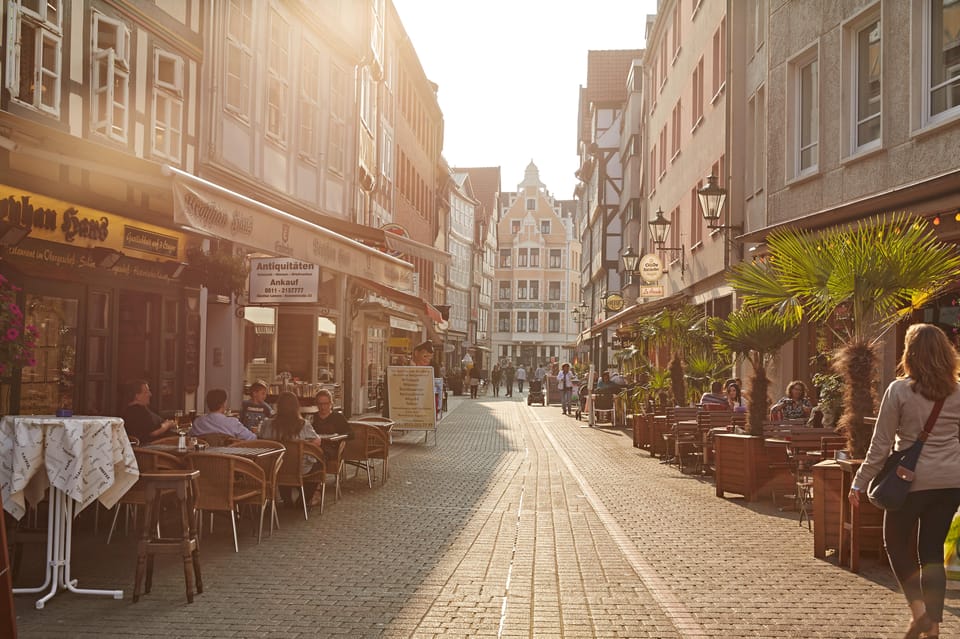
Hannover: Guided City Walk
walking_tourHanover's centre tells its story in layers, medieval church spires rising behind postwar concrete slabs, the extravagant copper-green dome of the Neues Rathaus anchoring one end of a park corridor that runs south to the Maschsee lake. This guided walk threads through the reconstructed Old Town, past the Leibniz House facade and the 14th-century Marktkirche with its soot-darkened brickwork, and into the commercial core around Kröpcke, where the city's daily pulse is easiest to read. The guide draws out connections a solo walker would miss, why the street grid bends where it does, which buildings survived the firestorms, where the medieval walls once ran.
A walking guide who knows the city's scars and reconstructions turns Hanover's seemingly modern centre into a legible palimpsest of seven centuries.
Insider tip: Ask your guide to point out the Nanas sculptures by Niki de Saint Phalle along the Leine riverbank, they are easy to walk past without realising who made them or why they once scandalised the city.
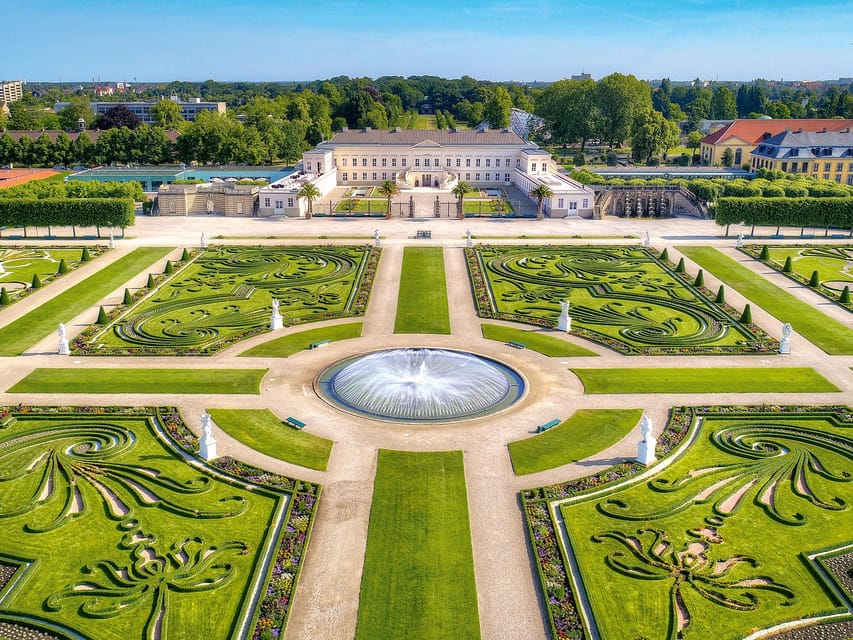
Hanover: Royal Gardens of Herrenhausen Guided Tour
guided_experienceThe Großer Garten at Herrenhausen is one of the few baroque formal gardens in Europe that survived intact in its original layout, geometric parterres, radial allées of clipped linden, and a central axis stretching toward the rebuilt palace. In January the fountains are shut off and the parterres lie dormant under frost-silvered turf, but a guided tour through the garden's bare framework reveals the mathematical precision of its 17th-century design more clearly than summer greenery ever could. Across the road, the Berggarten's tropical greenhouses wrap visitors in humid, orchid-scented air, a sharp, welcome contrast to the cold outside, housing one of Europe's largest orchid collections alongside cacti, palms, and a rainforest canopy walk.
Herrenhausen is where Leibniz walked and Sophie of Hanover shaped one of the continent's great garden visions, a place where Enlightenment geometry is laid out in living hedgerow and gravel.
Insider tip: Start with the Berggarten greenhouses to warm up, then cross to the Großer Garten, the bare winter structure of the hedges and allées photographs far better than the leafy summer canopy, and a guide can explain the hydraulic engineering behind the Grand Fountain without the crowds gathered to watch it spray.
This month: The Grand Fountain and water features in the Großer Garten do not operate during winter months. The Berggarten greenhouses and the Niki de Saint Phalle Grotto remain open and are the primary draw for a January visit.

Taste and Travel Odyssey in Hanover
otherThis food-focused walk moves through Hanover's eating quarters with a local guide who knows which bakery pulls its Butterkuchen from the oven at what hour and where the Markthalle vendors keep their best small-batch mustards behind the counter. Stops span the spectrum from traditional Lower Saxon charcuterie, thinly sliced Bregenwurst with its coarse, peppery bite, to the newer wave of craft producers and specialty coffee roasters who have settled into the streets around the Lister Meile. The pacing is generous enough that each tasting sits and settles rather than blurring into the next.
Hanover's food identity runs deeper than its tourist reputation suggests, and a guided tasting compresses months of local exploration into a single afternoon.
Insider tip: Eat lightly beforehand, the portions at each stop are meant to add up to a full meal, and arriving hungry lets you appreciate the contrast between the heavy, smoky warmth of traditional dishes and the sharper, brighter flavours at the newer stops.

Culinary bike tour
foodCycling through Hanover in January means bundling up against near-freezing air. But the flat terrain and dedicated bike lanes that make this one of Germany's most cycle-friendly cities do not vanish with the season. This tour pairs the ride with food stops, the pedalling between tastings works as both transport and appetite builder, connecting neighbourhoods that a walking tour would strain to cover in the same timeframe. The route threads through residential quarters and along canal paths where bare birch branches arch overhead, linking local bakeries, delis, and small restaurants that cater to regulars rather than passing visitors.
The bike adds range, you taste across three or four of Hanover's distinct neighbourhoods in a single outing, covering ground a walking food tour cannot.
Insider tip: Wear windproof gloves and a neck gaiter. The ride itself generates enough warmth to stay comfortable. But bare hands on handlebars at 4°C go numb inside ten minutes.
This month: January temperatures averaging around 4°C make warm layering essential for this ride. Confirm availability with the operator, as some cycling tours in northern Germany adjust their winter schedules.
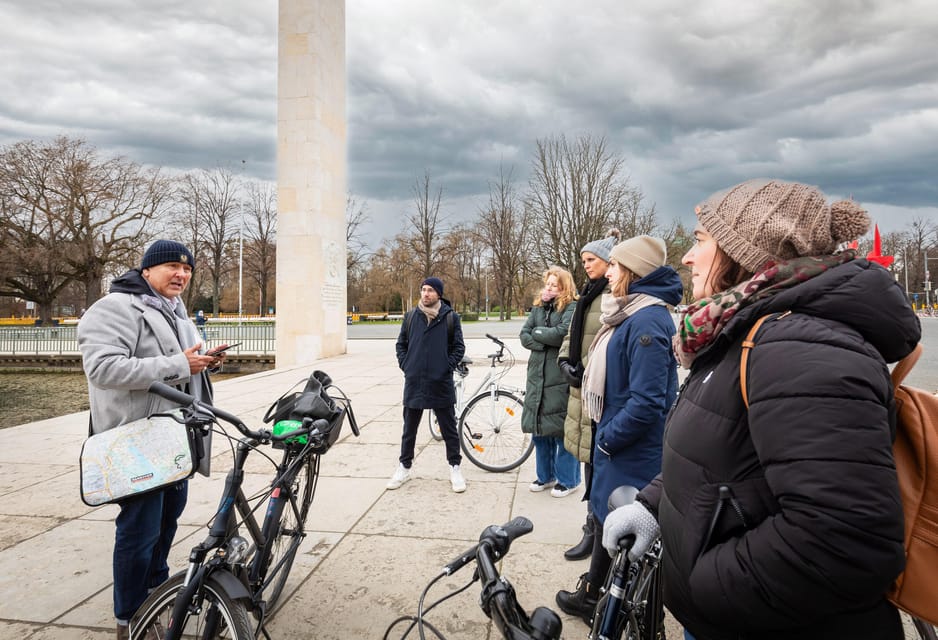
Hanover: Crime Tour by Bike
guided_experienceThis tour trades the usual architectural narration for Hanover's criminal history, cycling to sites connected to real cases, some infamous, some half-forgotten, while a guide reconstructs the events with the deadpan precision of a courtroom summary. The route covers districts most visitors never enter, passing through quiet residential streets and along the Ihme river where the stories attached to ordinary-looking buildings carry a chill that has nothing to do with the weather. The bike keeps the pace brisk enough that the narrative builds momentum rather than dragging between stops.
A true-crime lens reframes familiar city geography, the same river walk and park bench that look peaceful in daylight acquire an entirely different weight when you know what happened there.
Insider tip: This tour works best with a small group, the guide's delivery is conversational rather than broadcast, and the smaller the cluster, the more the stories land with their full unsettling force.
This month: Dress for sustained cycling in cold, damp conditions. Confirm winter availability with the operator, as scheduling may differ from the warmer months.

Goslar City guided tour
guided_experienceAn hour south of Hanover by train, Goslar sits at the northern edge of the Harz mountains and holds a UNESCO World Heritage designation for its medieval old town and the thousand-year-old Rammelsberg mine above it. The guided tour moves through streets lined with slate-roofed half-timbered houses, their carved wooden facades darkened by centuries of mountain weather, past the Kaiserpfalz, the imperial palace where Holy Roman emperors held court, and into the narrow lanes around the Marktplatz, where the smell of roasted almonds and fresh Lebkuchen drifts from bakery doorways. In January, the town is quiet enough that the guide can linger inside the Huldigungssaal to let the gilded medieval wall paintings register without the press of a summer crowd.
Goslar preserves a density of medieval architecture that Hanover itself lost to wartime bombing, a day trip here adds a thousand years of visible history to any Hanover stay.
Insider tip: Take the regional train from Hannover Hauptbahnhof rather than driving. The approach through the Harz foothills, with bare beech forest climbing the hillsides and the occasional snow-dusted ridgeline, is worth the journey on its own.
This month: The Harz foothills around Goslar may carry snow in January, making cobblestone streets slippery, wear shoes with solid grip. The cold concentrates the wood-smoke smell that hangs in the old town's narrow lanes, and the Kaiserpfalz interior has a warm refuge between outdoor stretches.
Where to Stay in Hanover in January
Hand-picked hotels across price tiers for January travellers.
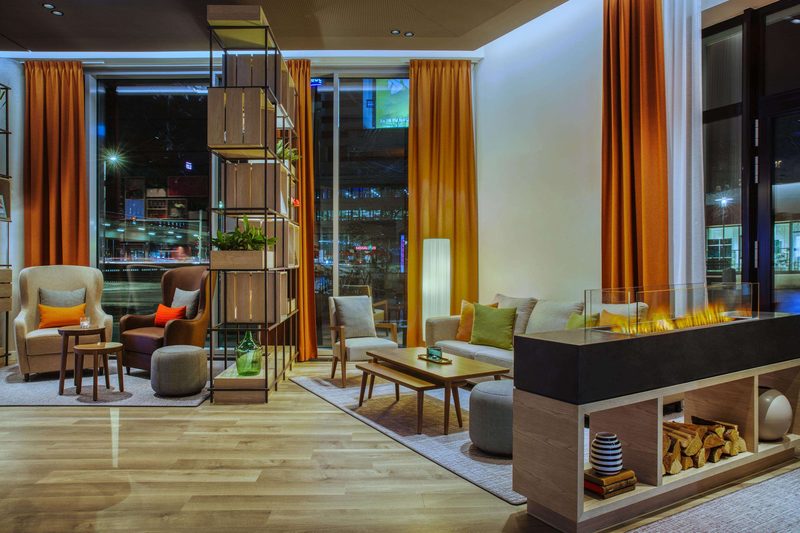
★★★★
Mid-Range
IntercityHotel Hannover Hauptbahnhof Ost
From $143 / night
Check Prices on Trip.com →
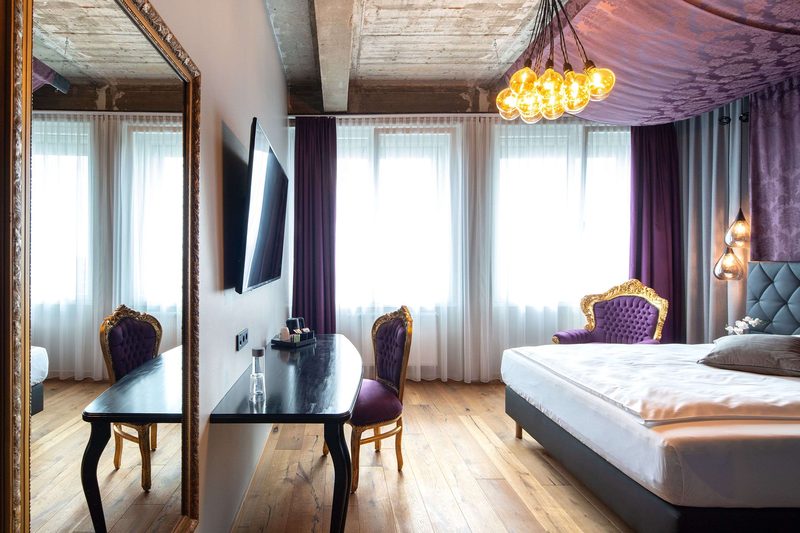
★★★
Budget
Loftstyle Hotel Hannover, BW Signature Collection
From $90 / night
Check Prices on Trip.com →
Public Holidays in January
Dates that affect opening hours, transport and crowds
Neujahr
Known in English as New Year's Day. Observed nationwide as a public holiday.
Heilige Drei Könige
Known in English as Epiphany. A public holiday in these regions only: DE-BW, DE-BY, DE-ST.
Neujahr
Known in English as New Year's Day. Observed nationwide as a public holiday.
Heilige Drei Könige
Known in English as Epiphany. A public holiday in these regions only: DE-BW, DE-BY, DE-ST.
Packing Checklist
Bookmark this page — your progress is saved between visits
Need the full list with shopping links?
Climate-specific gear, brand recommendations, and what to leave at home.
View Hanover Packing List →Essential Tips
Insider knowledge and common pitfalls to avoid
Insider Knowledge
Hanover's Roter Faden, the Red Thread, is a painted line on the pavement that connects 36 of the city's landmarks in a self-guided walking loop of about 4.2 km (2.6 miles). In January, the red paint can be hard to spot under frost or wet leaves. The route itself is the single best way to orient yourself in the city center on your first day. It passes the Neues Rathaus, the Leine Palace, the Marktkirche, and the opera house. Following it at your own pace takes about two and a half hours with stops.
The Neues Rathaus, Hanover's extraordinary city hall built in 1913, has a curved elevator that rides at an angle up inside the dome to a viewing platform at about 98 m (322 ft). In January, the platform is often nearly empty. The views across the flat North German landscape are clearest on the cold, high-pressure days that occasionally break through the overcast. The elevator ride itself, tilting as it follows the curve of the dome, is unlike anything you have experienced in another building.
Locals drink Luttje Lage, a combination of top-fermented Hanover beer and corn schnapps poured simultaneously from two glasses held in one hand. It is the signature drink of the city, traditionally associated with the Schuetzenfest in July. The traditional brewhouses in the Altstadt serve it year-round. Watching a first-timer attempt the two-glass pour is a reliable source of entertainment at any Hanover bar in January, when the locals have nothing better to do than teach visitors the technique.
The Markthalle on Karmarschstrasse, a covered market hall that has operated in various forms since 1892, is where Hanoverians shop for food. In January it is warm inside, smells of fresh bread and smoked fish, and has prepared food counters that serve better weekday lunches than most restaurants in the city center. It is also a useful place to try regional specialties like Calenberger Pfannenschlag, a pork-and-onion skillet dish, without committing to a full restaurant meal.
Avoid These Mistakes
Expecting the Herrenhausen Gardens to look like the photographs. Every promotional image of the Grosser Garten is shot between May and September when the fountains run and the parterres are in bloom. In January the gardens are stark and leafless. Visitors who came specifically for the baroque landscaping leave disappointed. The Berggarten greenhouses are the real January attraction. But many tourists walk right past them heading for the main garden.
Underestimating the wind chill. Hanover's recorded temperatures hover around freezing, which sounds manageable. The city's position on the open North German Plain means persistent wind that drops the felt temperature well below what the forecast says. Visitors from mountainous or sheltered cities routinely underdress. An hour of walking along the Maschsee in a wind that has crossed 200 km (124 miles) of flat farmland without a single hill to slow it down will make that clear.
Confusing Hanover, Germany with Hanover, Pennsylvania or Hanover, New Hampshire. This sounds trivial. It leads to wrong expectations about climate, currency, language, and what there is to do. Hanover, Germany is a major Lower Saxon city of roughly 535,000 people with an opera house, a university, and a baroque garden complex. It is not a small American town. If your search results are showing you events in York County, Pennsylvania, you are looking at the wrong Hanover.
Short on time? See day trips around Hanover on GetYourGuide.
Ready to plan your trip to Hanover?
Now that you've got the research covered, here's where to go next.
Explore More Activities in Hanover
Didn't see anything interesting yet?
Browse Viator's full catalog of tours, day trips, food experiences, and private guides in Hanover.
See All Hanover Tours on Viator